
BLOG 2- Genre Research
- lozhou
- Oct 15, 2023
- 8 min read
ANIME
· an extension of comic, novel and new type of cartoon
in this termenology, animation usually stand for Japanese Anime but not Western Animation, is also the first part of ACG (Anime Comic Games).
About Anime
-Anime is a type of hand-drawn and computer-generated animation that has its roots in Japan. Anime is the name given to Japanese animation in languages other than Japanese and English.
-However, regardless of style or place of origin, all animation works are referred to as anime in that country. Anime-influenced animations are those created outside of Japan that have a similar aesthetic to Japanese animation.
SOME EXAMPLE
2. This is a classic piece from a classic comic ( One piece )
The picture up here is the original piece from the comic book, which we can see this is totally Black and White color, with different shot in one scene.

The picture below is the animated version, all of the color, sound and some changed detail been finally shown on the screen.
This is similar when some people trying to make a film.

For the example, here are some suggestion of both modern and earlier anime:
One Piece/ Naruto / BLEACH (Three major migrant worker animations :D)
FGO ( classic long series)
Angels of Death/ Steins (Some of the best game adaption animation)
EVA ( Just watch, dont need reason, i mean u have to watch)
AQUAPLUS/ monster
( too much to list, I'll list all of them here) Cyberpunk edge runner, Maid dargan, Doraemon, Conan, From Abyss, 無職転生 〜異世界行ったら本気だす〜, Mononoke, DEVILMAN crybaby, chainsawman, Jojo's Bizarre Advanture, Death note, 寄生獣, The Promised Neverland, GINTAMA, Dr. stone ( there are too much I didnt write but the animes which are yellow is something that either got historical significance or is some thing that definetly have to watch)
DIFFERENCE
In modern society, the animator usually would like to use a software or some app to make anime ( animation )
They will draw the new movement beyond the old one, and connect them together to make a animated movement.


This is the earlier years that people usually make animation.
This is the western animation, but at the begining Japanese anime is also doing the same stuff by drawing character's different movement on the same picture and transform each picture really fast to creat animation.
The history of Anime
1. The embryonic period (1917-1945)
The initial period of Anime was inspired by the American animated film "Deformed Nipple" and the French animated film "Convex New Painting Curtain", which were imported into Japan. These two animated films caused great repercussions in Japan, aroused the national consciousness of some people with lofty ideals, and began to make their own animations. To this end, The Japanese have created a new term "manga" as the title for animated films ("manga" in Japanese means "movie").
During this period, a group of early cartoonists emerged in Japan, such as Seitarō Kitayama, Masaoka Kenzo and Lai Wei Guangshi. They founded some animation film production companies and completed a series of cartoons, which can be regarded as the first batch of cartoons in Japan.
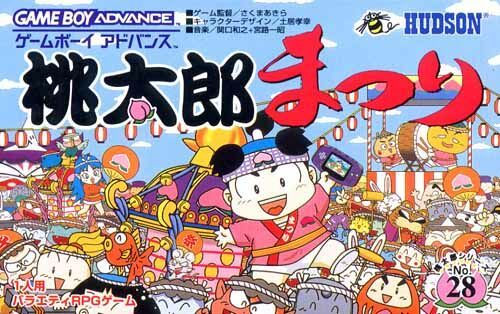
Unfortunately, due to the influence of war and politics at that time, the production of animation had a certain orientation, and the most representative one was Momotarō, the Sea Warrior. Although this work has certain skills, its reactionary Propaganda and advocacy of war are also a kind of dark history.
In general, during this period, Anime was affected by the war and politics, and its initial stage was very immature. At this stage, Anime people have realized that only by surpassing Disney can Anime have a living space.
2. Exploration period (1945~1962)
After World War II, Japan's animation industry was once very depressed. This situation lasted until 1956, when Toei Animation Co., Ltd. acquired Nippon Animation Co., Ltd. and established Dongying Animation Co., Ltd., this situation was improved to a certain extent. At the same time, another very important cartoonist was Noburo Oto, who was known as the only wolf in the Anime industry, and almost competed with the monopoly Dongying by one person.
Of course, that's not enough. Anime will not reach its international status today. The real beginning of Anime should start from a man, who is the god of Japanese comics - Osamu Tezuka.

←OSAMU TEZUKA and his characters
The original name of Tezuka Tsukiji was Tezuka Tsukiji. In elementary school, he was enthusiastic about collecting insect specimens, and later used a pen name for a type of insect called Shizuka. He was enlightened from his childhood and was interested in comics and animation. After seeing Momotarō, the sea warrior, he felt a lot and decided to engage in animation.
After the war, Japan experienced an economic depression, with a plethora of waste waiting to be revived. New and old ideas and systems collided with each other, and everyone followed the whirlpool of society like a headless fly. At this time, the red book "New Treasure Island" drawn by Tezuka Yuzuke sold 400000 copies through abnormal distribution channels, and many people began to draw comics in this way, which was the prototype of later comic books.

The red book "New Treasure Island" drawn by Tezuka applies zoom, wide-angle, and overhead viewing techniques from movies and television to children's adventure stories, causing the characters to "move". This is an epoch-making progress in the expression techniques of Japanese manga, which has determined the future path of Tezuka and also changed people's perception of manga.
After extensive creative efforts, Tezuka Tezuka founded the Tezuka Tezuka Animation Production Department in 1961. Since the manga, he will once again carry out a revolution in the animation field.
At that time, the worldwide animation field was dominated by Disney. Since the success of Snow White in 1937, Disney has established its own set of animation production theories and production processes, becoming the only classic and standard. Walt Disney's meticulous attitude towards moving the form of a real person onto the screen is admirable, but it also has unavoidable limitations: high production costs ensure quality but limit quantity. And Disney, too, once went bankrupt due to the production of 'Pinocchio'.
However, Tezuka Yuzuke has subverted Disney's classics and norms with his unique

animation philosophy and operating methods. He believes that rather than the actions of characters, he should care more about their hearts, and the story is the most important. Guided by this philosophy, Tezuka developed a complete production process to minimize production costs: he attempted to create typical actions for typical characters; Try to create a dialogue in the blink of an eye and move the mouth three times. The use of this static dialogue scene greatly saves money. And it focuses on using television to promote animation to animation groups at all levels, which is where Osamu Tezuka laid the foundation for Anime's current status.
Today, low-cost, storytelling Japanese television animations are using quantity as a weapon to invade the global animation market like locusts.
3. Comprehensive Revitalization Period (1963-1978)
In this period, it can still be said that Osamu Tezuka led the way, maintained a strong creative force, and made great contributions to Anime.
As The Asahi Shimbun said——
"The only reason why Anime is popular is that Japan has a Osamu Tezuka, which will not happen in other countries. If it weren't for Tezuka, it's hard to imagine Japanese manga shining brightly after the war."
To cite the greatest, Osamu Tezuka has mainly contributed the following points to Anime:
1. Improved the artistic character of animation
2. Established the generation mode for animation scripts
3. Created the theme of robot performance
4. In some works, sharp criticism is given to the chronic diseases of society
5. In the experimental short story, some profound issues were discussed and higher
difficulty artistic expression techniques were attempted to give courage to later generations
6. Affects the performance style of later generations
Of course, during this period, in addition to Tezuka Higashi, there were also a group of influential anime characters, such as Hiroshi Nagai and Zhangtaro Ishime. Nagai Hao created the aesthetics of violence in anime, while also leading the trend of robotics; On the other hand, Zhangtaro Ishimori attempted to seek a new positioning and development for Japanese comics in the 21st century by emphasizing the omnipresence of "comics", and its impact is immeasurable.
Many animists who are very important today have also made their way to the historical stage at that time, such as Ryoha Ahyan, Takahata Xun, Hayao Miyazaki, etc. Of course, it will take some time for them to live in the anime trend.
In this stage, animation works emerge one after another, and the works that really mark the end of the era and the beginning of a new era still promote Galaxy Railway 999, which marks the maturity of Anime's animation art.
4. The Golden Age (1978-1989)
As mentioned in the summary, this is the golden age of Anime. The reason why 1978 was chosen as the beginning of this era is precisely due to the emergence of two works - Galaxy Railway 999 and Up to 0079.
The artistic level of these two works, their broad perspective, in-depth thinking on human nature and social issues, their ability to control long narrative, and their level of imaginative expression have all reached a level beyond previous works.
At the same time, from its beginning, a number of great works have emerged in the Anime industry, such as "Gunda Mobile Warrior", "Robot Cat", and many cartoonists have appeared - the artistic talent and pattern are no less than that of Matsumoto Toshizuka of Osaka Tezuka and Hayao Miyazaki, and two robot cat creators Fujiko, who have influenced several generations of people, Ryuko Takahashi, who has extraordinary talent, has created a

brilliant record, as well as Yoshihiko Miyazaki Motsumoto Masami Mota and so on... This is the most creative stage of Anime, the real golden age.
At the same time, in this period, after Osamu Tezuka, another master of Anime came on the stage. He was Hayao Miyazaki. His works abandoned the commercial nature of cartoons, and pushed the artistic nature of cartoons to the extreme. He was the first thinker in the history of Japanese cartoons who raised animation to a high level of humanity. At the same time, he was also the spiritual pillar of the three generations of Japanese animators, who inherited the past and ushered in the future. Miyazaki, while breaking the shadow of the Tezuka giant, has set a new example for future generations of animators with his steadfast character and uncompromising struggle.
Later, in 1983, the world's first "original video animation" (ova for short) appeared in the Anime market. It has the style of a movie and is required according to the production level of the movie, but its content is more colorful.
In general, Anime developed rapidly during this period. Until 1989, Tezuka died of illness. At the same time, Anime was affected to some extent by the "Tsutomu Miyazaki" incident.

↑ EVA!!!!!!!!!!!!!!!!!!!!!!!!!!!!!!!!!!!
5. The Glory of the End of the Century (1990-2000)
Due to the "Tsutomu Miyazaki Qin" incident, the Anime industry entered the end of the century in the sharp criticism of all parties. Of course, the huge industrial foundation of Anime cannot be shaken by an event. During this period, works such as "Random Horse 1/2", "City Hunter", "Cherry Ballet", "Crayon Shin chan", "Bishōjo Warrior", "Slam Dunk Master" and so on appeared in succession.
Then, in 1995, the New Century Gospel Warrior came out, which caused Social phenomenon and made the animation industry completely separate from the impact of the Tsutomu Miyazaki incident, ushering in an era of industrial development.
In the past decade, the animation industry has undergone the following changes——
1. From an artistic perspective, the work has become more refined
2. Influenced by Western fantasy literature, mythological and magical themes have greatly increased
3. The comprehensiveness of the theme and content, as well as the increase in breadth and depth of comprehensiveness
4. The level of animation art is gradually recognized by various aspects of society

During this period, Hayao Miyazaki was still a very important animator, and few animators were able to break through his artistic style. However, besides Hayao Miyazaki, our now well-known names such as Oyu Keyang, Odai Shou, and Hideyoshi Ino also made extremely important contributions during this period, each leading the way in a moment of fashion.
At the same time, more themes of animation began to appear, such as detective reasoning (Aoyama Gangchang's "Detective Conan"), magic (Takeuchi Takeuchi's "Bishōjo Warrior"), history (and Yue Shinhiro's "Wanderer's Sword Heart"), young blood (Yoichiro Oda's "The One Piece"), sports (Inoue Xiongyan's "Slam Dunk Master"), education (Fujisawei's "Spicy Teacher GTO"), and so on


Comments